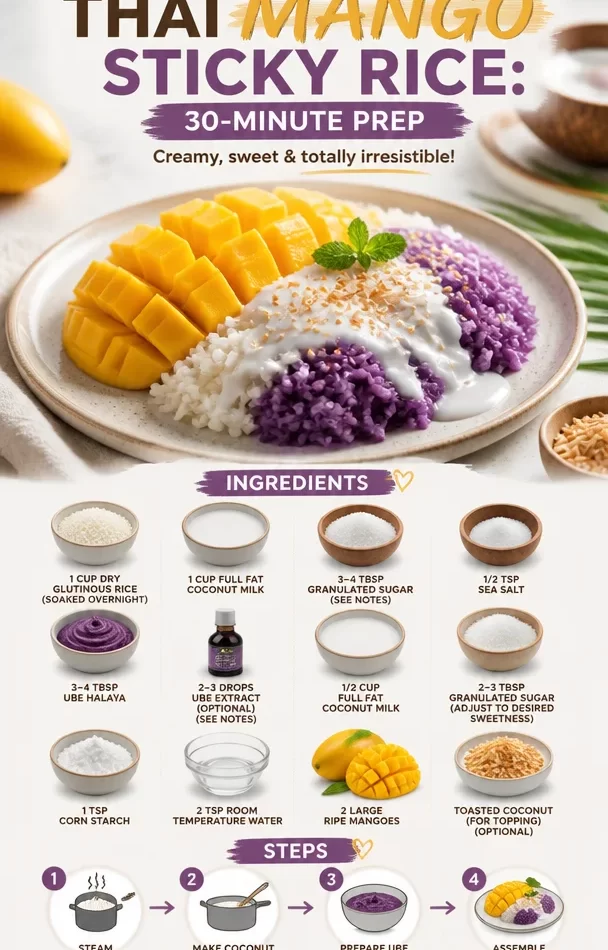
Indulge in a Sweet Escape: Thai Mango Sticky Rice
Hello, friends! 🌊 I’m Isla, and today we’re diving headfirst into a delightful dessert that’s a crowd-pleaser at any gathering: Thai Mango Sticky Rice! If you’ve ever traveled to Thailand, you might remember the enchanting aroma of coconut and the sweet, luscious taste of ripe mango. Well, you’re in luck because I’m about to share a recipe that captures all those beautiful flavors right in your kitchen. So, roll up your sleeves, grab your favorite apron, and let’s get cooking!
A Slice of My Culinary Journey
Before we jump into the nitty-gritty of cooking, let me share a little nugget of nostalgia. You see, I grew up in a coastal town where food was less about fancy recipes and more about creating memories. One summer, when I was just a kid, my parents decided to host an impromptu backyard get-together. The air hummed with laughter, and the warmth of the sun melted any lingering tensions.
As the sun began to set, my mom brought out a platter of bright, juicy mangoes, beautifully sliced and arranged next to bowls of sticky rice smothered in creamy coconut sauce. It was such a simple dessert, yet everyone’s eyes lit up with joy. The combination of sweet mango and rich coconut was enough to evoke the happiness of summer, leaving our little hearts yearning for more. It was on that warm evening, with laughter filling the air, that my love for Thai Mango Sticky Rice was born.
Ingredients
Gather your ingredients, and let’s embark on this sweet culinary adventure! Here’s what you’ll need:
-
1 cup dry glutinous rice (soaked overnight)
This sticky rice is the star of the show. Soaking it overnight ensures it cooks evenly and achieves that ideal chewy texture. Don’t fret if you don’t have glutinous rice—short-grain rice can work in a pinch! -
1 cup full-fat coconut milk
This ingredient is essential for that creamy richness. Feel free to swap it with light coconut milk if you prefer a lighter version, but trust me—the full-fat version is pure decadence! -
3-4 tbsp granulated sugar
Adjust the sweetness to your liking. If you’re feeling adventurous, consider using palm sugar for a more authentic taste! -
1/2 tsp sea salt
A pinch of salt enhances the flavors beautifully. Don’t skip it—it’s the secret ingredient! -
3-4 tbsp ube halaya
This purple yam treat adds a vibrant color and unique flavor to the dish. If you can’t find ube, you can replace it with sweetened red bean paste for an equally delicious twist! -
2-3 drops ube extract (optional)
For that extra burst of ube flavor. It’s not a deal-breaker, but it definitely enhances the experience. -
2 large ripe mangoes
Pick the ripest ones you can find! Foster that sweet juiciness that creates magical contrasts against the sticky rice. -
Toasted coconut (for topping)
This is optional, but believe me, it’s worth adding for that crunchy texture! Just toast some coconut flakes in a dry skillet until golden.
Step-by-Step Instructions
Now that we’ve gathered our ingredients and you’re armed with family memories, let’s get cooking!
-
Prepare the Rice
Start by draining the soaked glutinous rice. Rinse it a couple of times until the water runs clear—this removes excess starch, ensuring the rice doesn’t clump together. Now, add the rice to a pot with 1 cup of fresh water. Cover it with a lid and bring it to a boil over medium heat. Once boiling, lower the heat and steam with the lid on for about 20 minutes until it’s tender. Pro Tip: Keep the lid on during the entire cooking time to maintain steam! -
Make the Coconut Sauce
While your rice is cooking, let’s whip up that dreamy coconut sauce. In a small saucepan, combine 1 cup of full-fat coconut milk, sugar, and sea salt. Gently heat it over low heat, stirring until the sugar dissolves completely. Don’t let it boil! You want a silky sauce, not a coconut explosion. Taste and adjust sweetness if needed; add ube halaya for some delightful color and flavor. If using ube extract, add a few drops here. -
Combine and Mix
Once the rice is cooked and fluffy, transfer it to a mixing bowl (leave a bit of coconut sauce for drizzling later). Pour the warm coconut sauce over the sticky rice and mix gently until everything is beautifully coated. Cover the bowl with a lid or a clean kitchen towel to keep it warm and let it sit for about 15-20 minutes. This step allows the flavors to meld and the rice to absorb that luscious coconut goodness. -
Slice the Mangoes
While you let that sticky rice absorb all the tasty flavors, it’s time to prep the mangoes! Slice them lengthwise, removing the pit, and carefully peel the skin off. Then, cut them into lovely thin wedges or cubes. -
Plating Time!
Now comes the fun part—let’s plate! Scoop a generous portion of the sticky rice onto a plate, arrange the beautiful mango slices alongside, then drizzle some reserved coconut sauce on top. Finish with a sprinkle of toasted coconut flakes for that crunchy touch! Each bite will transport you straight to a sun-soaked Thai beach.
Serving Suggestions
Serve this Thai Mango Sticky Rice warm or at room temperature, garnished with toasted coconut flakes and an extra drizzle of coconut sauce. It’s perfect as a decadent dessert or even a sweet breakfast treat!
Recipe Variations
Feeling adventurous? Here are a few twists you might love:
-
Add a Splash of Lime: A few drops of fresh lime juice can elevate the flavors and add a zingy brightness.
-
Mixed Berries: Swap out mango for a mix of fresh berries for a fun and colorful spin.
-
Coconut Ice Cream: Serve a scoop of coconut ice cream alongside for an indulgent dessert experience.
-
Matcha Twist: Stir some matcha powder into your coconut sauce for a green tea-inspired version.
Chef’s Notes
This recipe has evolved beautifully over the years! I originally learned it during a trip to Thailand, where street vendors whipped it up in no time. I love it now with the addition of ube halaya; it adds such a fun color, and who doesn’t love vibrant food? One time, I even made this for a potluck, and it disappeared before I could take a picture! Remember, cooking is about making memories and embracing flavors, so don’t stress if it doesn’t turn out perfect. Happy accidents often lead to delightful surprises in the kitchen!
FAQs and Troubleshooting
1. What if my rice is too sticky?
If you find your rice overly sticky, it’s likely because it overcooked or too much water was added. For next time, be sure to stick to the exact rice-to-water ratio and cook covered!
2. Can I make it ahead of time?
Absolutely! You can prepare the rice and sauce a few hours ahead and keep both covered until serving. Just rewarm the coconut sauce slightly before serving.
3. How can I store leftovers?
Store any leftovers in an airtight container in the fridge for up to 2 days. The rice may firm up, but simply reheat with a bit of coconut milk for that creamy texture again!
4. What can I substitute for glutinous rice?
Short-grain rice is your next best option. While the texture won’t be identical, it will still be delicious and offer that comforting factor!
Nutritional Info
This delightful dessert is rich in flavor and can be a treat for the spirit, but here are some approximate nutritional values per serving:
- Calories: 400
- Total Fat: 15g
- Saturated Fat: 13g
- Carbohydrates: 65g
- Fiber: 3g
- Sugar: 20g
(Keep in mind that variations in portion size and added ingredients may adjust these numbers!)
Thank you for joining me on this kitchen journey! I hope you enjoy making this Thai Mango Sticky Rice as much as I enjoyed sharing it with you. Grab a fork, gather your favorite people, and let’s celebrate the joy of good food together! Don’t forget to share your creations and tag me on social media—I love seeing your culinary masterpieces! Happy cooking! 💛
Print
Thai Mango Sticky Rice
- Total Time: 45 minutes
- Yield: 4 servings 1x
- Diet: Vegetarian
Description
A delightful Thai dessert combining sticky rice, coconut milk, and ripe mango for a sweet escape.
Ingredients
- 1 cup dry glutinous rice (soaked overnight)
- 1 cup full-fat coconut milk
- 3–4 tbsp granulated sugar
- 1/2 tsp sea salt
- 3–4 tbsp ube halaya
- 2–3 drops ube extract (optional)
- 2 large ripe mangoes
- Toasted coconut (for topping)
Instructions
- Prepare the rice by draining and rinsing soaked glutinous rice until water runs clear. Add to a pot with 1 cup of fresh water, cover, and bring to a boil over medium heat. Once boiling, lower heat and steam with the lid on for about 20 minutes until tender.
- Make the coconut sauce by combining 1 cup of full-fat coconut milk, sugar, and sea salt in a saucepan. Heat gently over low heat until sugar dissolves. Add ube halaya and optional ube extract.
- Combine the cooked rice with most of the coconut sauce in a mixing bowl, gently mixing to coat. Cover to keep warm for 15-20 minutes.
- Slice the mangoes lengthwise and cut them into wedges or cubes.
- Plate by scooping sticky rice onto a plate, arranging mango slices alongside, drizzling with coconut sauce, and topping with toasted coconut.
Notes
Serve warm or at room temperature. Garnish with toasted coconut for a delightful crunch.
- Prep Time: 15 minutes
- Cook Time: 30 minutes
- Category: Dessert
- Method: Steaming
- Cuisine: Thai
Nutrition
- Serving Size: 1 serving
- Calories: 400
- Sugar: 20g
- Sodium: 200mg
- Fat: 15g
- Saturated Fat: 13g
- Unsaturated Fat: 2g
- Trans Fat: 0g
- Carbohydrates: 65g
- Fiber: 3g
- Protein: 5g
- Cholesterol: 0mg
Keywords: Thai dessert, Mango Sticky Rice, coconut, sweet dessert